
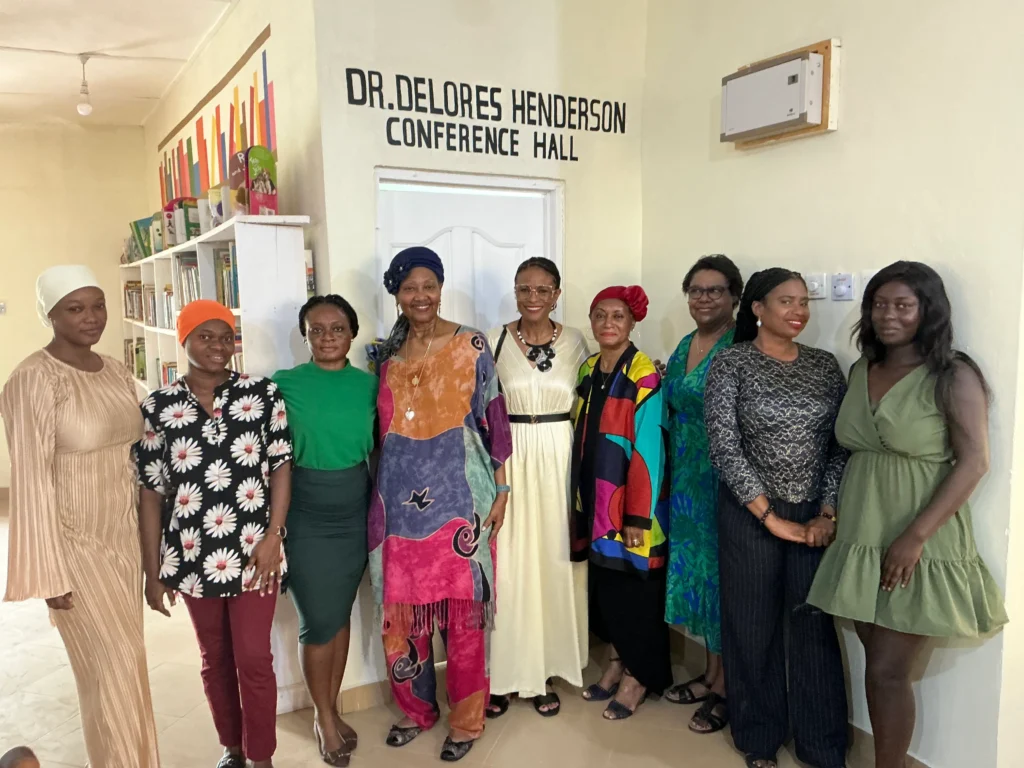
For the past couple of years, our trips to Ghana have been about far more than travel. Each visit has been an opportunity to build meaningful relationships with leaders and students, especially girls, and to spend time in schools where the need is real, the potential is enormous, and the future is still being written.
At the center of this work is a simple belief: girls deserve every tool they need to learn, grow, and progress. That means more than encouragement. It means access. It means books. It means computers. It means internet connectivity. It means creating environments where learning is not limited by what is missing, but expanded by what is possible.
That is what has made these journeys so powerful.
In 2025, our work in Ghana reached a major milestone: we opened a community library. This is not just a room with books on shelves. It is a place where people can come to read, use computers, study, and imagine bigger possibilities for themselves and their families. It is a shared space for learning, growth, and connection.
There is something powerful about a library in a community. It says knowledge belongs here. It says curiosity belongs here. It says young people, especially girls, deserve a place where they can sit down, focus, explore, and dream without limitation. In a world that often makes access unequal, a library is a quiet but bold act of justice.
This project was made possible through the generosity of those who understood the importance of that mission. We gathered books from the Minneapolis-St. Paul chapter of the Links Incorporated, the Greater Twin Cities Minnesota chapter of the Links Incorporated, and the Girlfriends Incorporated Minneapolis-St. Paul chapter. Their contributions helped transform a vision into a resource the community can use for years to come. That kind of collective effort matters. It reminds us that when people come together around a shared purpose, real change can happen.
And while education was at the heart of the trip, Ghana offered us so much more.
We had the chance to experience the extraordinary artistry of the Ghanaian people by visiting local markets filled with handcrafted items made from wood and beads. Everywhere we turned, there was beauty shaped by skill, tradition, and creativity. These were not just souvenirs or market goods. They were expressions of history, craftsmanship, and identity.
We also visited the Kente cloth museum, where we learned more about how these remarkable textiles are made and the significance they carry. Seeing the intricate process up close gave us an even deeper appreciation for the artistry behind Kente cloth and its place in royal garments and cultural tradition. It was a vivid reminder that heritage is not abstract. It is alive, woven, worn, and passed down.
Not every part of the journey was beautiful in the same way.
We also visited the slave castles and heard about the atrocities committed there. There is no clean or comfortable way to experience those spaces. They are painful. They are haunting. They force you to confront the brutality of history in a deeply personal way. Standing in those places, you cannot help but reflect on the lives stolen, the suffering inflicted, and the generations marked by that violence.
And yet, that experience also underscored why this work matters so much. To invest in education, dignity, and opportunity is to push back against the legacy of dehumanization. It is to say that the future must be different from the past. It is to honor memory not just with words, but with action.
Another unforgettable part of our time in Ghana was celebrating International Women’s Day. We had the opportunity to hear from speakers from across the continent who are doing extraordinary work in government and in their communities. The energy in that space was powerful. These were women leading, building, advocating, and transforming systems in real time. Their voices were bold, insightful, and deeply rooted in service.
It was impossible to sit in that environment and not feel inspired. International Women’s Day in Ghana was not just a celebration. It was a call to action. It was a reminder that when women and girls are equipped, supported, and seen, they do not simply participate in change. They drive it.
Looking back on these trips over the past few years, one thing is clear: this work is not about charity. It is about partnership. It is about listening, learning, and standing alongside communities in ways that are practical, respectful, and lasting. It is about making sure girls have what they need not only to succeed in school, but to lead in life.
Ghana has given us the opportunity to serve, but it has also taught us so much in return. It has shown us beauty in craftsmanship, strength in community, truth in history, and hope in the next generation. And with the opening of this community library, that hope now has a home.
The books are there. The computers are there. The doors are open.
And the work continues.